LUMIWHITE Academy
CLEAR ALIGNERS FOR BEGINNERS with LUMILIGNER
CLEAR ALIGNERS FOR BEGINNERS with LUMILIGNER
Couldn't load pickup availability
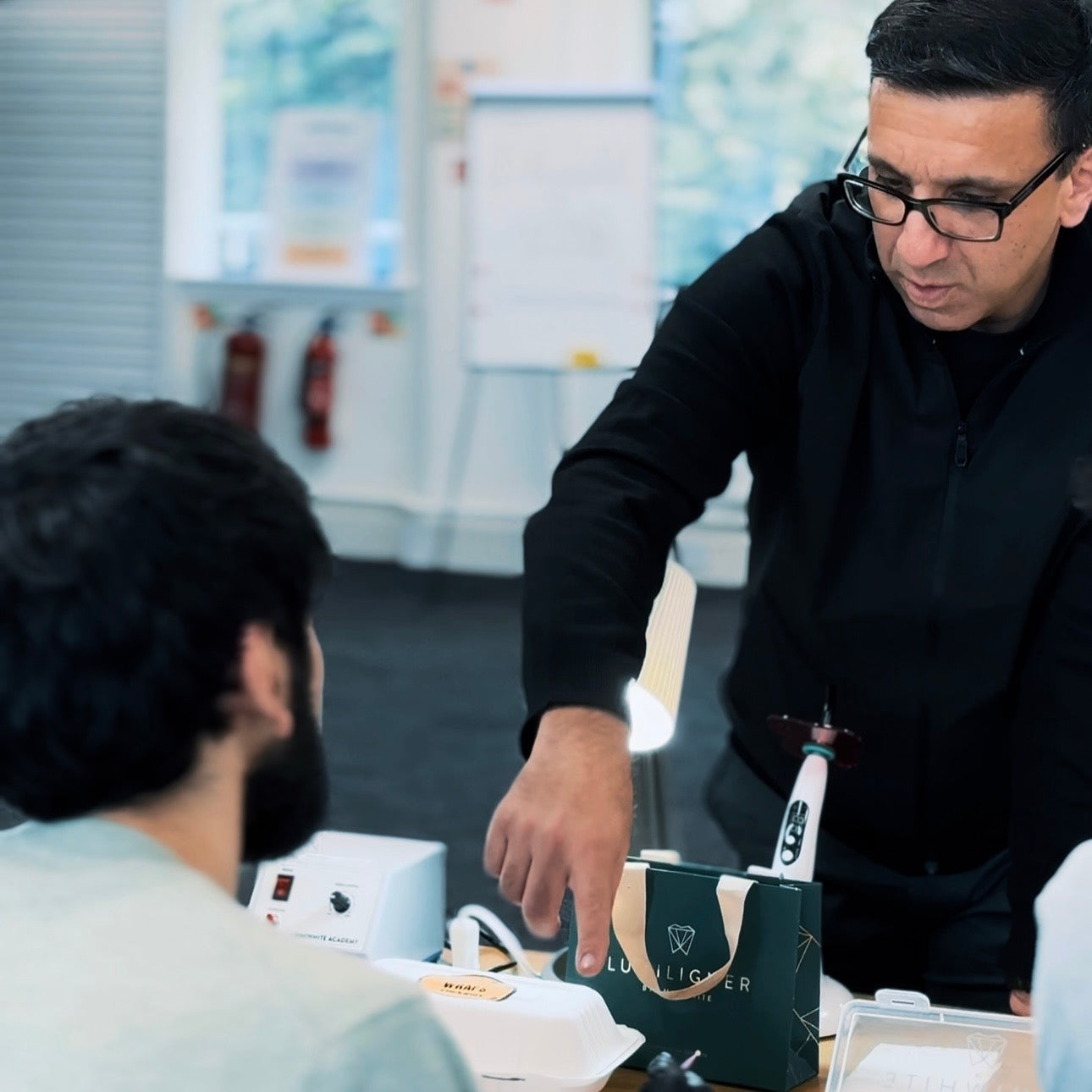
Join us in Leeds for a 1-day, beginner-friendly, hands-on course on clear aligners. Learn with LUMILIGNER and gain skills you can use with any aligner system.
This comprehensive programme has been designed to provide clinicians with a structured, predictable framework for delivering clear aligner therapy in modern general practice.
While the course is delivered using LUMILIGNER as the aligner system, the principles, protocols and decision-making frameworks taught are fundamentally applicable to all clear aligner systems. The focus is not simply on a product, but on clinical control, risk management and long-term stability.
This is an end-to-end aligner workflow, from consultation through to retention.
Course Philosophy
Successful aligner treatment is not defined by the brand of aligner used, but by:
- Case selection
- Treatment planning precision
- Structured consent
- Technical execution
- Review discipline
- Retention strategy
This programme is built around those core pillars.
Course Structure
1. Foundations & Clinical Context
- Introduction to the speakers and their clinical background
- Integration of aligner therapy within general and aesthetic dentistry
- Rationale for selecting LUMILIGNER within practice
2. The Structured Consultation
A repeatable consultation framework covering:
- Intraoral scanning
- Clinical photography
- Radiographic assessment (OPG)
- Case suitability assessment
- Treatment discussion and expectation management
- Consent documentation
The emphasis is on creating a professional, defensible and conversion-focused consultation.
3. The 5STP Treatment Planning Protocol
A structured prescription framework designed to:
- Improve clarity of communication with the aligner provider
- Reduce revision cycles
- Enhance predictability of digital setups
- Maintain clinician-led control
These planning principles apply across aligner systems.
4. Digital Setup Assessment & Modification
- Critical evaluation of proposed tooth movements
- Identifying unrealistic biomechanics
- Communicating modification requests effectively
- Avoiding common approval errors
Planning discipline directly reduces refinements.
5. Consent & Risk Communication
Clear and structured discussion of:
- Attachments
- Interproximal reduction (IPR)
- Treatment duration
- Refinements
- Fees and inclusions
- Retention
Delivered with emphasis on medico-legal protection and patient clarity.
6. First Fit Appointment Protocol
- Structured aligner delivery
- Expectation setting
- Compliance guidance
- Clinical documentation standards
7. Attachment Placement – Demonstration & Practical
- Video demonstration of clinical technique
- Hands-on placement principles
- Bonding protocol
- Finishing and polishing
- Complication prevention
8. Interproximal Reduction (IPR)
- Instrumentation options
- Case selection
- Safe reduction guidelines
- Risk mitigation and documentation
Applicable regardless of aligner brand.
9. Review Appointment Structure
- Monitoring tracking
- Identifying non-tracking early
- Photographic updates
- Intervention protocols
Structured reviews reduce reactive refinements.
10. Whitening Integration
A protocol for safely incorporating whitening during aligner therapy to enhance aesthetic outcomes and patient satisfaction.
11. Mid-Treatment Review & Refinements
- Identifying appropriate refinement timing
- Minimising unnecessary additional phases
- Efficient resubmission workflows
12. Attachment Removal & Retention Strategy
- Enamel-safe attachment removal
- Retainer planning (removable and/or fixed)
- Long-term stability protocols
- Managing transition to restorative treatment
13. Relapse & Long-Term Risk Management
- Causes of relapse
- Prevention strategies
- Clinical management pathways
- Structured patient communication
14. Case Presentations
Clinical cases illustrating:
- Planning rationale
- Treatment progression
- Challenges encountered
- Outcome analysis
Learning Outcomes
By the end of this course, delegates will be able to:
- Conduct a structured and defensible aligner consultation
- Prescribe cases using a defined planning protocol
- Confidently place attachments and perform IPR
- Critically assess digital setups
- Manage reviews systematically
- Implement a robust retention strategy
- Apply these principles across multiple aligner systems
This programme is designed for clinicians who want structure, clarity and clinical confidence in aligner therapy - irrespective of the aligner brand utilised.
It is a disciplined, systemised approach to clear aligner treatment within modern practice.
Share